

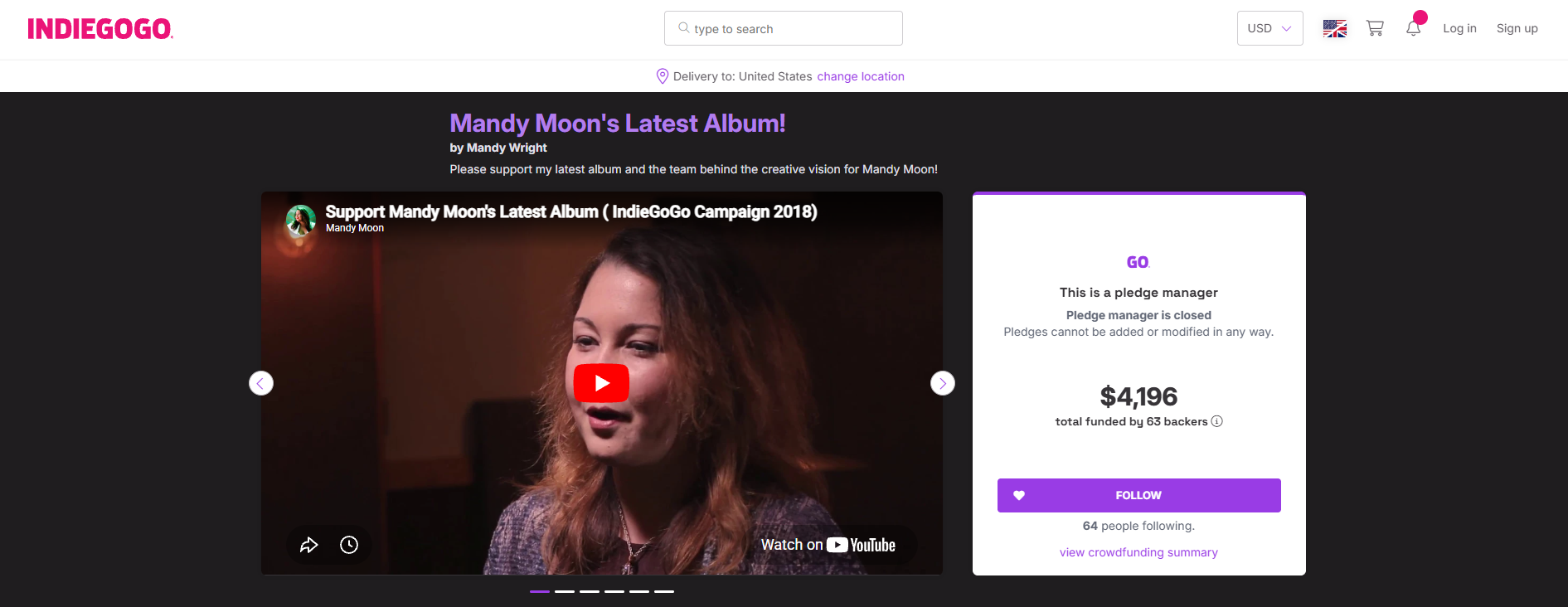
Crowdfunding sounds like a money question, but most of the work is really a trust question.
People do not back a project only because the reward tiers are cute or the video is polished. They back it because they understand what you are making, why it matters now, and how their support helps the work become real.
That was the part I had to learn quickly. The campaign was not separate from the music. It was part of the release story.
Start with the promise
Before I thought about graphics, copy, or reward tiers, I had to get clear on the promise of the campaign. What was I inviting people into?
For an artist, that promise has to feel honest. It cannot sound like a corporate pitch wearing a stage outfit. It needs to explain the project clearly while still sounding like the person making it.
My campaign needed to answer a few simple questions:
- What am I making?
- Why does this project matter?
- What will the money help pay for?
- What does a backer receive in return?
- What happens after the campaign ends?
Those questions became the spine of the campaign.
Build rewards people can understand
Reward tiers should feel exciting, but they also need to be manageable. A reward that sounds clever during planning can become a problem later if it takes too much time, costs too much to fulfill, or creates confusion for backers.
The strongest rewards were the ones that connected directly to the music and the story around it. They felt personal, but still practical.
That balance matters. People want to support the artist, not accidentally create a second full-time job for them.
Keep momentum visible
Campaigns need rhythm. You cannot post once, disappear, and hope everyone remembers to come back.
I treated the campaign like a small release cycle. There were updates, reminders, thank-you notes, behind-the-scenes moments, and clear calls to action. Some posts were emotional. Some were practical. Some were simple progress updates.
The point was to keep the campaign alive without making every message sound like an emergency.
Make the work easy to share
The easier something is to explain, the easier it is for other people to share.
That meant the campaign needed short descriptions, clear visuals, and a simple reason someone could pass it along. Not everyone who shares will write a paragraph about why they care. Sometimes they need one clean sentence and a link.
Good campaign planning helps your supporters help you.
What I would tell another artist
Do not wait until launch week to figure out the story. The story is the campaign.
Plan the budget, the timeline, the rewards, and the communication rhythm before you ask people to show up. Then when the campaign is live, you can spend more energy connecting with people and less energy scrambling behind the scenes.
Crowdfunding is vulnerable. It asks you to be visible before the outcome is guaranteed. But when the campaign is grounded, specific, and human, it can become more than a funding tool.
It can become a bridge between the work and the people who want to see it exist.